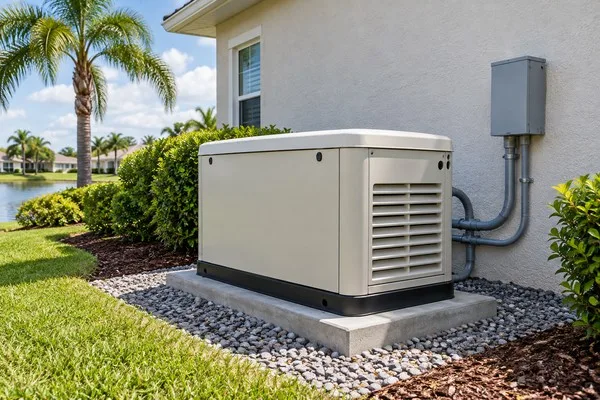
The best time to schedule a standby generator installation in Sanford is well before hurricane season. Between the site evaluation, sizing, permits, fuel hookup, and inspection, the process takes time, and demand jumps once the first storm is in the forecast. Booking early gets your system in place before you need it.
At Spectrum Electric Inc., we have been installing generators across Central Florida for more than 25 years. To get started, reach out to our team or call (407) 880-8977 for a quote.
Why should Sanford homeowners book generator installation early?
Because a generator is not a same-week purchase. Atlantic hurricane season runs June through November, and once a storm is headed toward Central Florida, everyone calls at once. Units sell out, schedules fill, and permits back up.
Sanford homeowners know how disruptive a long outage can be. Homes near Lake Monroe, older houses in the historic downtown, and newer neighborhoods across Seminole County can all lose power for days after a strong storm.
Waiting until the forecast turns serious usually means waiting until after the storm. Booking during the quieter months, like now through spring, gives you the best chance of having everything installed, inspected, and tested before next season starts.
It also takes the pressure off. You can make decisions about size, placement, and fuel calmly instead of rushing because a storm is three days away and every store shelf is empty.
What does the generator installation timeline look like?
The process moves through five main steps, and each one takes time. Understanding them makes it clear why calling early matters.
It starts with a site assessment. We calculate your home's electrical load and choose the best location for the unit. Next comes permitting. Electrical permits, and often plumbing permits for the gas line, are filed with the local building department, which in Sanford depends on whether your home is in the city or unincorporated Seminole County.
Then comes installation. We pour a concrete or composite pad, mount the unit, and install the automatic transfer switch. A licensed plumber connects the generator to your natural gas line, or a buried propane tank is installed if you do not have gas.
Finally, the system is inspected, and we run a simulated outage test and walk you through how it works. The longest step is usually delivery of the unit itself, so ordering early matters most.
How do we size a generator to your home instead of upselling?
We size the generator to what you actually want to power, based on an on-site load calculation, not square footage. Bigger is not always better. The right size is the one that fits your home and your priorities.
After the last storm outage, one of our customers came to us with a list of what he wanted to keep running. His freezer was at the top. He loved cooking in big batches and freezing meals for later, and during the outage he had to throw much of it away.
We talked through everything else on his list and how the installation would work. Starting from what matters to you is how we keep the system right-sized.
In general, 10 to 14 kW units cover essentials like the refrigerator, key lights, Wi-Fi, and one central air conditioner, often with a soft starter. 16 to 20 kW units provide managed whole-house coverage. 22 to 26 kW units handle larger homes with multiple AC units or a pool pump.
How can the sizing calculator help before your consultation?
Our generator sizing calculator gives you a planning estimate before we visit. You answer a few quick questions about your home size, cooling, and the systems you want to keep running, and it points you to the right range.
That makes the consultation more productive. You will already have an idea of whether you are looking at essentials coverage or whole-house power, and you can come to the visit with questions about the options that fit your budget. It only takes a few minutes.
The final size is always confirmed with a free on-site assessment by a licensed technician. That visit accounts for your electrical panel, fuel source, and actual power usage, and it happens before anything is ordered.
Take a few minutes with our generator sizing calculator, then bring your results and your list of must-have appliances to the consultation.
What should you expect on cost and next steps?
A standard 22 kW air-cooled generator installation often falls between $12,000 and $15,000. The final price depends on the unit size, fuel source, gas or propane work, transfer switch needs, site access, permitting, and placement.
We primarily install Generac generators, and we can also install and service Kohler, Briggs and Stratton, Cummins, and Champion units. Every standby system includes an automatic transfer switch that shifts your home to generator power in about 10 seconds after utility power is lost.
We are a Florida State Certified Electrical Contractor, License EC13008455, and we handle permitting and schedule the inspection for you, so you are not chasing paperwork. Learn more about our generator installations.
Do not wait for the first outage to start planning. Contact Spectrum Electric Inc. or call (407) 880-8977 to schedule your free consultation and lock in your spot before storm season.